After the Final Whistle: Defining Canada's World Cup Legacy
TSN Highlights: Youtube - Canada vs Bosnia, Walk Out
Oshawa, July 20, 2026 – On Sunday evening, as Spain lifted the FIFA World Cup trophy before a global audience of billions, another remarkable chapter in sporting history came to a close. Like many, I took in the moment from my living room, but no matter where people enjoyed the spectacle, it was a wonderful end to the journey we had all been on together.
For one unforgettable month, the world gathered across Canada, Mexico and the United States to celebrate the beautiful game. We witnessed extraordinary individual and team performances, dramatic upsets, breathtaking goals in the final minutes of extra time and moments of sportsmanship that reminded us why sport has the unique ability to unite people across cultures, languages and generations.
Here in Canada, we also proved something important.
We proved that our country can successfully host one of the largest and most complex sporting events in history. Two of our biggest and brightest cities welcomed supporters from around the globe. In fact, Sports Illustrated named Vancouver the absolute best World Cup host city out of all 16 locations across North America, while Toronto was ranked highly in third place. Volunteers gave countless hours to create unforgettable experiences. Communities embraced the opportunity to showcase not only our stadiums and infrastructure, but our diversity, hospitality and pride. Weren’t the fan marches to stadiums an incredible sight to see?
It was a summer that many of us will remember for the rest of our lives. But now the tournament is over. The stadiums have emptied. The supporters have returned home. The world's attention has shifted to the next chapter. The question I think that we should now be asking is not who won the World Cup, but what will remain because we hosted it?
For me, that question carries special significance.
As National Executive Director of Canada SCORES, I have the privilege of leading an organization that exists because another country asked that very same question more than thirty years ago.
Following the 1994 FIFA World Cup in the United States, visionary leaders recognized that the tournament's greatest success should not simply be measured by attendance records or television audiences. They believed the true legacy of hosting soccer’s biggest event should be measured by the lives it could transform long after the final whistle.
That vision gave birth to what is now The SCORES Network. That moment is part of our origin story.
Today, thirteen affiliates across North America use soccer, poetry and service-learning to help children discover confidence, leadership, belonging and their own unique voice. Tens of thousands of young people have benefited because someone, decades ago, understood that investing in children is the most meaningful legacy any sporting event can leave behind. Over 15,000 children each year have the opportunity to learn, grow and reach their full potential as a result of the last North American World Cup Legacy.
This summer, I had the extraordinary privilege of witnessing legacy from another perspective.
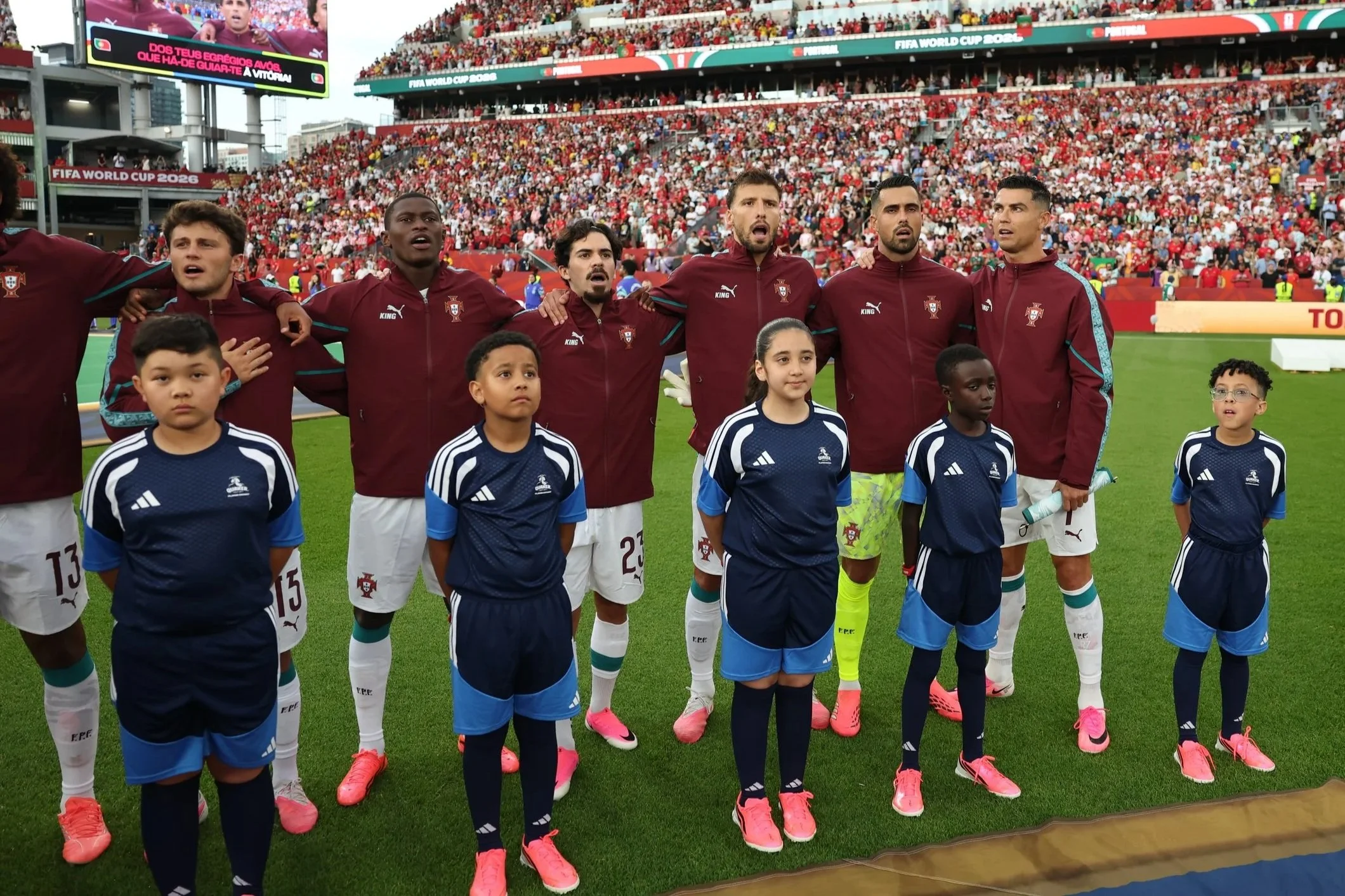
Through the collaboration of our partners at Common Goal with their established network, nearly 300 children from underserved communities in Canada had the opportunity to participate as Quaker Youth Player Escorts at every FIFA World Cup match hosted in our country. Watching those young people walk onto the world's biggest sporting stage alongside the athletes they admired was about far more than the game.
For many of them, it was a moment that expanded their understanding of what was possible. Those memories will remain with them long after the television cameras have gone.
But inspiration, by itself, is never enough. A child inspired by the World Cup in July still needs somewhere safe to play in September.
They still need caring mentors. They still need positive role models. They still need opportunities to belong, to build confidence, to lead, and to discover that their voice matters just as much as their athletic ability.
That is where true legacy begins.
Too often, we define the success of major sporting events by medals, trophies, tourism numbers or economic impact. Those measures certainly matter. But perhaps the greatest measure of success is much simpler.
Did more children become active?
Did more young people believe they belonged?
Did more communities become stronger?
Did more opportunities become available for those who have historically had the fewest?
If the answer to those questions is yes, then the World Cup will have achieved something far greater than sporting excellence. It will have strengthened our society.
Canada now has a remarkable opportunity.
The excitement generated over the past month should not be viewed as the conclusion of a successful tournament. It should be viewed as the beginning of a long-term commitment to investing in young people through sport, education and community.
That means creating more accessible programs. It means reducing barriers to participation.
It means recognizing that every child deserves the opportunity to experience the confidence, friendships and life skills that sport can provide, regardless of their family's financial circumstances or postal code.
If we truly want to honour the legacy of this World Cup, our greatest investment cannot be in facilities alone. It must be in children.
During the lead up to the World Cup, Canada SCORES was also selected as 1 of 27 grantees in the first cohort of the FIFA Global Citizen Education Fund Grants. An audacious goal was set by organizers to raise $100 Million dollars around this World Cup, to invest in education for children around the world. Big impact comes from big ideas.
Incredible when you think that out of thousands of applicants from countries around the world, the leadership of the fund, represented by both FIFA & Global Citizen, saw the same potential in Canada SCORES today, that their peers did more than 30 years ago.
Could history be repeating itself? Has SCORES Founder Julie Kennedy’s vision, all those years ago, come full circle the very next time the World Cup was held in North America? And will the legacy of this World Cup help Canada SCORES Founder Jon Lutz realize his vision of giving young people across Canada the opportunity to find their voice, their team, and their place in their community? Only time will tell.
History reminds us that the impact of a World Cup is not measured only in the weeks it is played. Sometimes its greatest influence is felt decades later.
We know that because organizations like Canada SCORES—and our twelve fellow SCORES affiliates across North America—exist today because leaders in 1994 chose to think beyond the tournament itself.
Now it is our turn.
As I reflect on the extraordinary month we have just experienced, I find myself filled not with nostalgia, but with hope.
Hope that young Ariyah, who conquered her fears, held hands with the legend Luca Modric, and confidently walked out in front of over 43,000 cheering fans as she attended her first World Cup match, may one day represent her country as a player or coach in the next generation.
Hope that a young newcomer to Canada, such as Zulfiqar, who learned to speak English less than a year ago and discovered this summer how soccer could provide a pathway to a place where he truly belongs and can thrive.
Hope that the inspiration felt by millions over these past few weeks will become something lasting in the classroom, in after school programs, across neighborhoods and communities throughout our country.
The final whistle has blown.
One tournament has ended.
But Canada's opportunity to define its legacy is only beginning.
Because in the end, the greatest legacy of the 2026 FIFA World Cup will not be determined by the nation that lifted the trophy.
It will be determined by what we choose to build for children after the celebration is over.